How Many Pool Lights Do I Need?
One of the most common questions we hear at Parrot Bay Pools is:
“How many lights does my pool need?”
The answer depends on the size, shape, and features of your pool—not just its length. Proper pool lighting isn’t just about making your backyard look beautiful. It’s also an important safety feature that allows swimmers to clearly see the pool at night while creating an inviting atmosphere for entertaining.
As a general rule, one light is rarely enough for today’s fiberglass pools. Most homeowners are happiest with two or more strategically placed LED lights that eliminate dark spots and highlight the pool’s design.
General Pool Lighting Guidelines
While every pool should be individually designed, these recommendations work well for most residential pools.
| Pool Length | Recommended Number of Lights |
| Up to 20 feet | 1 LED light |
| 20–30 feet | 2 LED lights |
| 30–40 feet | 2–3 LED lights |
| 40+ feet | 3–4 LED lights |
Keep in mind these are starting points. Features such as tanning ledges, sun shelves, beach entries, spas, and swim-outs often require additional lighting.
Tanning Ledges and Sun Shelves Usually Need Their Own Lights
One of the biggest mistakes homeowners make is assuming the main pool lights will illuminate the tanning ledge.
In reality, shallow water reflects light differently than deeper water, often leaving the ledge dimly lit.
If your pool includes:
- A tanning ledge
- Sun shelf
- Baja shelf
- Splash shelf
An additional LED light is often recommended.
This creates:
- Better nighttime visibility
- Improved safety for children
- A balanced appearance
- More dramatic lighting effects
Many homeowners who skip the extra ledge light later wish they had installed one during construction.
Pool Shape Matters. Not every pool requires the same lighting.
Rectangle Pools. Rectangle pools often provide the most even light distribution and may require fewer fixtures.
Freeform Pools. Freeform pools have curves and varying widths that create shadows. Additional lights are often needed to eliminate dark areas.
L-Shaped Pools. L-shaped pools almost always require extra lighting because one light cannot effectively illuminate around corners.
Pool Features That May Need Additional Lighting
If you’re investing in premium backyard features, proper lighting helps showcase them after sunset.
Additional lights may be recommended for:
- Tanning ledges
- Raised spas
- Spillways
- Bubblers
- Waterfalls
- Grottos
- Beach entries
- Swim-out benches
- Large entry steps
These features deserve their own illumination instead of relying on the main pool lights.
Why More Pool Lights Can Actually Cost Less Later
Adding lighting during construction is significantly more affordable than trying to install additional lights after the pool is completed.
Retrofitting lights later can involve:
- Cutting concrete
- Drilling fiberglass
- Running new conduit
- Additional electrical work
- Replacing decking
Planning your lighting correctly from the beginning can save thousands of dollars in future modifications.
LED Pool Lights Are the Best Choice
Modern LED pool lights have transformed backyard lighting.
Benefits include:
- Bright, even illumination
- Energy efficiency
- Long lifespan
- Minimal maintenance
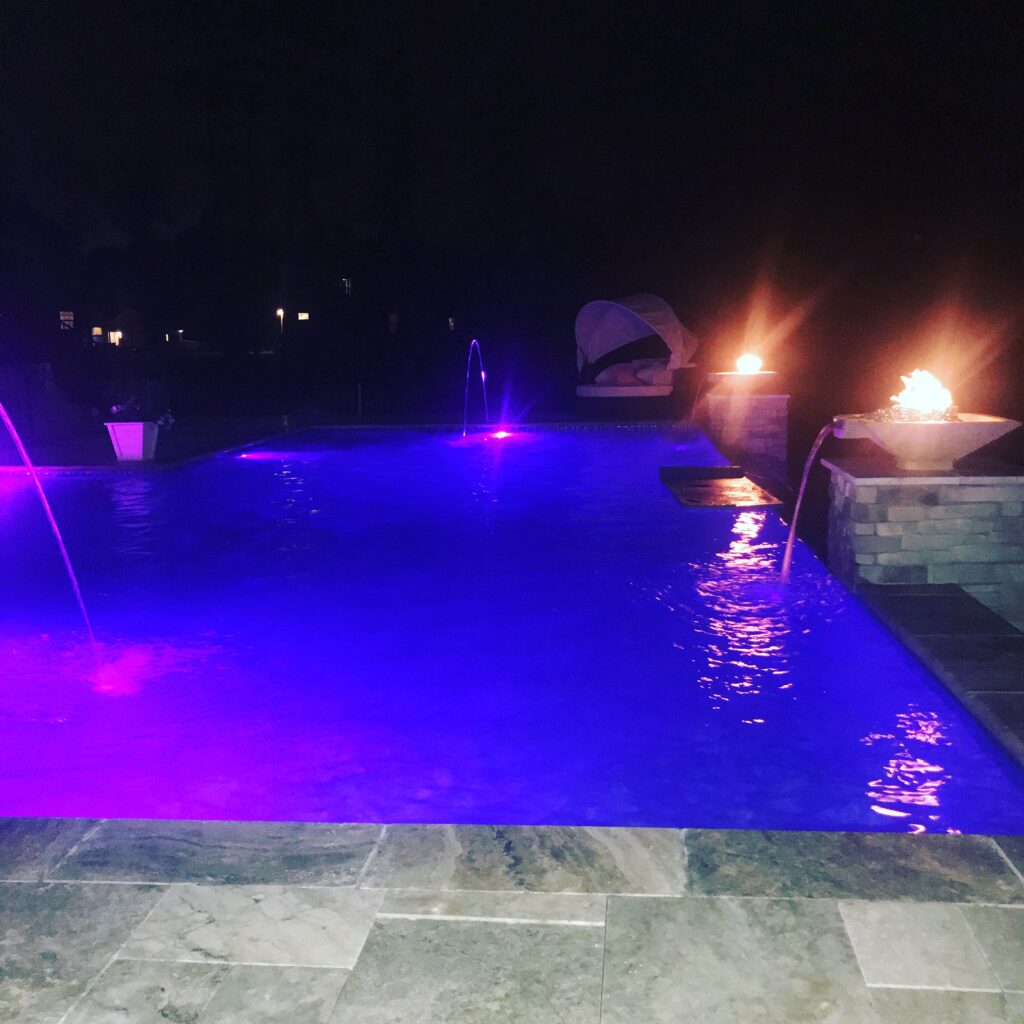
- Color-changing options
- Smart automation compatibility
Many homeowners enjoy changing colors for holidays, sporting events, birthdays, or simply relaxing evenings by the pool.
Proper Light Placement Is Just as Important
The number of lights matters—but placement matters even more.
Professional designers consider:
- Viewing angles from the house
- Seating areas
- Outdoor kitchens
- Fire pits
- Safety around steps
- Reflections on the water
- Shadows created by pool features
A poorly placed light can shine directly into your eyes while sitting on the patio.
At Parrot Bay Pools, every lighting plan is designed to maximize visibility while minimizing glare.
Frequently Asked Questions
Is one pool light enough?
Sometimes, but not usually. Smaller pools under 20 feet may only require one light, but most modern fiberglass pools benefit from at least two LED lights for better coverage.
How many lights should a 30-foot pool have?
Most 30-foot pools perform best with two LED lights. If the pool includes a tanning ledge or spa, a third light may be recommended.
Should a tanning ledge have its own light?
Yes. We frequently recommend a dedicated LED light for tanning ledges and sun shelves because shallow water doesn’t receive enough illumination from the main pool lights.
Can I add more lights later?
In many cases, yes—but it’s considerably more expensive than installing them during the initial construction. Planning ahead is almost always the better investment.
Do LED pool lights use a lot of electricity?
No. LED pool lights use significantly less electricity than older incandescent lights while producing brighter, more vibrant illumination.
Can pool lights change colors?
Yes. Most modern LED pool lights offer multiple colors, light shows, and programmable scenes when connected to an automation system.
Are pool lights required for safety?
While requirements vary by location, proper lighting greatly improves visibility at night and helps reduce the risk of slips, trips, and accidents around the pool.
Should pool lights face the house?
Generally, no. Professional designers usually position lights so they shine away from primary viewing areas, reducing glare while providing even illumination across the water.
Why Homeowners Choose Parrot Bay Pools
At Parrot Bay Pools, we believe your backyard should look just as incredible at night as it does during the day.
Our designers carefully plan every lighting layout based on:
- Pool size
- Pool shape
- Tanning ledges
- Water features
- Outdoor living spaces
- Landscaping
- Safety
- Long-term value
The result is a backyard that’s beautiful, functional, and enjoyable long after the sun goes down.